
What Is a Custom Christmas Jumper? A Simple Guide for First-Time Buyers
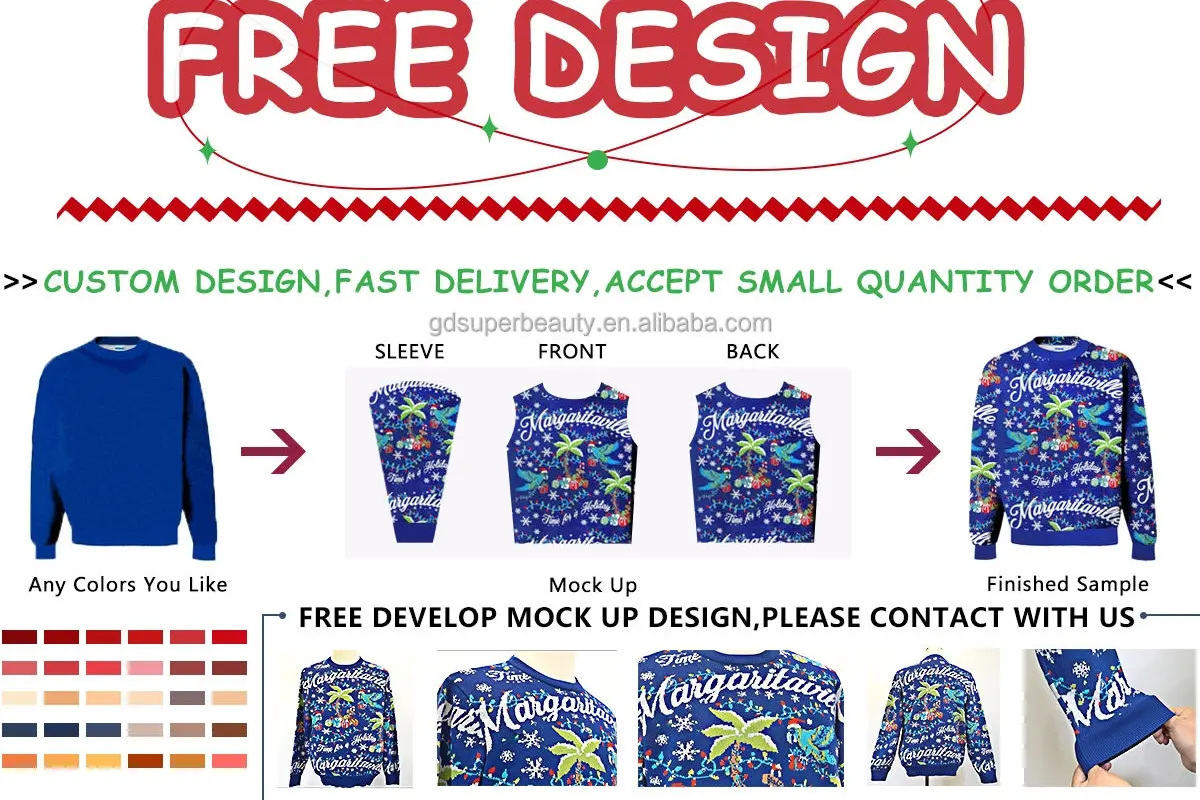
custom-christmas-jumper-guide-for-buyers.webp
Alt: Christmas jumper design example showing colour choices, panel mockups and a finished blue sweater
Most buyers start a custom Christmas jumper project with a design idea. It might be a company logo, a charity message, a Nordic-style pattern, a funny Christmas theme or a small retail collection.
Design matters, but it is only one part of the order. Before sampling or production, the buyer and supplier need to decide how the artwork will be knitted, which colours can be used, where the logo should sit, what yarn direction makes sense, how the sizes should be planned, and whether labels or packaging are needed.
Use this guide as the starting point for those decisions, especially before requesting a quote or approving a sample.
Custom Christmas jumpers are knitted products made around a buyer's design and order requirements. The buyer may choose the pattern, colours, logo position, text, yarn direction, size range, labels, hang tags, packaging and carton details.
Quick Buyer Checklist
Before asking for a quote, a buyer should be able to answer these points. They help the supplier give practical advice instead of guessing from a logo or a rough idea.
- What is the jumper for: staff gift, retail range, charity campaign, event or private label order?
- Who will wear it, and what size range is needed?
- Is the artwork simple enough for knitwear, or does it need embroidery for small logo details?
- Which colours are important, and do they need to match brand references?
- What material direction, weight and comfort level should the sample target?
- Are labels, hang tags, individual bags or carton sorting required?
- What deadline should sampling and bulk production work back from?
Why This Matters Before You Ask for a Quote
Suppliers can give better guidance when the project is clear. If the first message only says "we need custom Christmas jumpers," too many details are missing.
A stronger first request explains:
- what the jumper is for
- who will wear or buy it
- how many pieces may be needed
- whether the design is simple or detailed
- whether a logo must be included
- whether labels or packaging are required
- when the buyer needs the goods
Every detail does not need to be final. The supplier simply needs enough context to suggest realistic options.
Different Buyers Need Different Jumper Details
Corporate gift orders, retail collections, charity campaigns and private label ranges all need different planning.
For corporate gifts, buyers usually care about comfort, logo readability, size range and timing. The jumper should feel wearable, and the branding should be clear without making the design awkward.
For retail buyers, the questions are wider. Labels, packaging, size ratios, colour consistency and shelf presentation may all matter. The jumper has to work as a product, not only as a design.
For charity campaigns or Christmas market sellers, the design often needs to be easy to understand and practical to produce. A clear message and manageable production plan can be more useful than a very complicated design.
What Can Be Customised?
custom-christmas-jumper-design-options.webp

Alt: Red and green patterned Christmas jumpers being folded on a worktable
Buyers often focus on the front of the jumper first. That is understandable, because it is the most visible part. Still, a custom order can include many other areas.
Common options include:
- front body design
- back body design
- sleeve pattern
- neckline, cuff or hem colours
- logo placement
- text or slogan placement
- yarn colours
- material direction
- jacquard pattern
- embroidery detail
- woven or printed neck label
- care label
- hang tag
- folded polybag
- size sticker
- carton mark
Not every option adds value. A simple staff jumper may not need retail packaging. A private label order probably does. The buyer should decide which details help the final product and which details only add cost or delay.
Why Artwork Needs to Be Checked for Knitwear
custom-christmas-jumper-artwork-sample-review.webp

Alt: Close-up of hands using a needle on a red and green knitted Christmas jumper
Artwork on a screen can be much more detailed than artwork in stitches. Thin lines, tiny letters, gradients and small shadows may look fine in a file but become unclear when converted into knitwear.
That is why custom Christmas jumper artwork often needs adjustment before sampling. The supplier may need to simplify small details, enlarge text, reduce colour count or suggest a different method for the logo.
Bold snowflakes, reindeer shapes and geometric patterns usually translate more easily into knitwear. Small logos with thin letters may need embroidery, a larger size or a cleaner artwork version.
Instead of asking whether the file can be copied exactly, ask whether the design will still be clear and wearable after it becomes a knitted jumper.
Jacquard: Best for Patterns Built Into the Jumper
Jacquard knitting creates the pattern with yarn colours inside the fabric. This method is commonly used for Christmas motifs, Nordic borders, repeat patterns, large graphics and all-over festive designs.
It works best when the shapes are clear and large enough for stitches. Strong contrast also helps the pattern read well from a normal distance.
Before choosing jacquard, buyers should check whether:
- the design has enough scale
- the colour count is realistic
- tiny text can be avoided
- the artwork can be simplified without losing the idea
- the pattern needs to continue across sleeves or body panels
Jacquard can make a Christmas jumper feel integrated and traditional, but it is not the right method for every small logo.
Embroidery: Better for Some Logos and Small Details
Embroidery is added to the surface of the knitted jumper. It can be useful when a logo, name or small badge needs cleaner edges than jacquard can provide.
Buyers still need to review embroidery carefully. Dense stitching can affect the fabric surface, and the inside backing may change the feel against the body.
Useful sample checks include:
- whether the logo is readable
- whether the embroidery is too heavy
- whether the fabric puckers around the stitched area
- whether the placement feels balanced
- whether the inside backing is acceptable
Embroidery should solve a design problem. If the design already works well in jacquard, adding embroidery may only increase cost and complexity.
Combining Jacquard and Embroidery
Some jumpers use jacquard for the main festive pattern and embroidery for a smaller logo. This can be a good solution when the design has two different needs: a large knitted pattern and a sharper brand mark.
Check the combination in the sample. The embroidered area needs to look balanced with the knitted design, and it should not make the jumper uncomfortable or visually crowded.
Material Direction Affects Feel, Weight and Cost
custom-christmas-jumper-yarn-colour-planning.webp
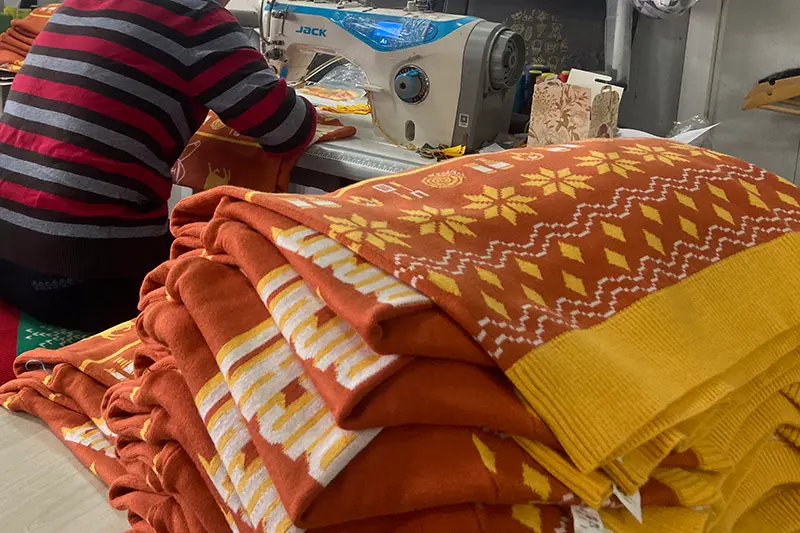
Alt: Stacks of orange and yellow Christmas jumpers beside a sewing machine
Material choice changes how the jumper feels, how warm it is, how it hangs, how it should be cared for and how it fits the target price.
Acrylic is common in Christmas jumpers because it can be warm, lightweight and cost-effective. Buyers still need to check hand feel, pilling tendency, weight and measurements during sampling.
Cotton blends may suit buyers who want a softer or more breathable feel. Wool blends may be suitable for warmer or more premium-positioned jumpers, but care requirements, comfort and cost need more attention.
Rather than choosing the material that sounds best, match the yarn direction to the buyer's market, budget, wearer expectations and design.
Artwork Details That Make the First Discussion Easier
Clear design briefs do not need to be complicated. They simply need to show what matters.
Helpful information includes:
- logo file
- front design idea
- back design idea, if needed
- sleeve design idea, if needed
- colour references
- text or slogan details
- preferred logo position
- reference images for style direction
- notes about anything that must stay unchanged
If the design is still rough, explain what is flexible. For example, "the logo must stay readable, but the Christmas pattern can be adjusted" gives the supplier a useful direction.
Colour Planning Needs More Than a Screen View
Screen colours, artwork colours, yarn colours and sample colours can all look different. This is normal, but it can cause confusion if buyers expect the screen file to match the knitted sample exactly.
Colour references help. Buyers can provide Pantone references, brand colour notes, yarn card choices or previous approved samples.
Contrast is especially important for Christmas jumper designs. If the base colour and pattern colour are too close, the design may look weak after knitting. The pattern should be readable from a normal distance, not only in a close-up file.
Size Range Should Be Planned Early
custom-christmas-jumper-size-range-review.webp
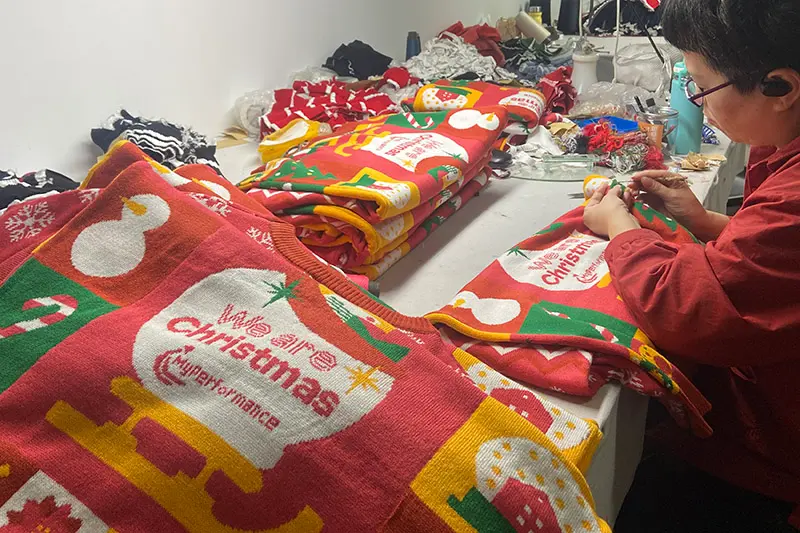
Alt: Worker finishing a red Christmas jumper by hand at a factory worktable
Sizing affects both wearer comfort and order planning. Buyers may need adult unisex sizes, men's and women's sizes, kids sizes, plus sizes or a family range.
Before sampling or bulk production, it helps to decide:
- which size system will be used
- whether the fit should be relaxed or closer to the body
- whether UK, EU or general international sizing is needed
- how many pieces to order in each size
- whether kids sizes need separate proportions
- whether plus sizes should be included
Even a strong design can create problems if the size split is wrong. For retail orders, size planning also affects stock risk.
Labels and Packaging Should Not Be Left Until the End
custom-christmas-jumper-label-packaging-checklist.webp
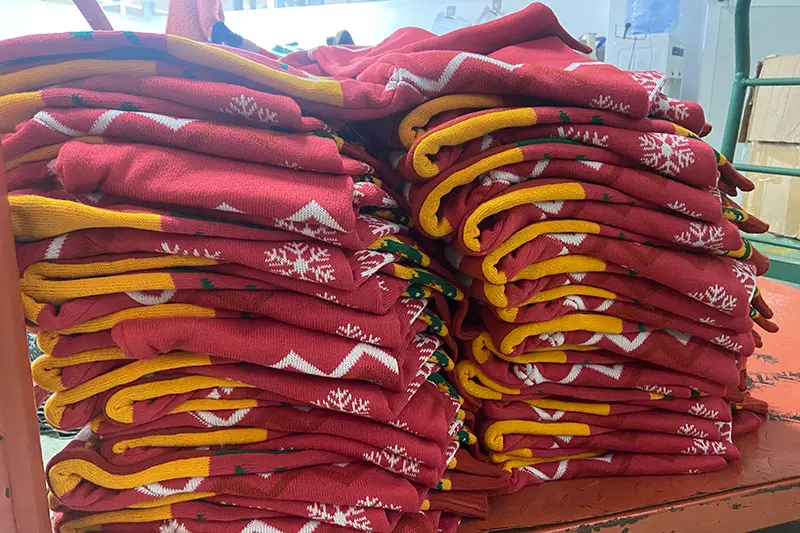
Alt: Stacks of folded red Christmas jumpers with white snowflakes and yellow trim
Private label and retail orders often need more than the jumper itself. Labels and packaging can affect both the sample and the final packing process.
Common items include:
- woven neck label
- printed neck label
- care label
- size label
- hang tag
- barcode sticker
- folded polybag
- size sticker on packaging
- carton mark
- retail packaging
Buyers should provide label and care information where required. A supplier should not invent legal, compliance or fibre-content wording without clear instruction from the buyer.
How to Use the Sample Stage
Before approving bulk production, use the sample to check the parts that are hardest to judge on screen: colour, logo clarity, hand feel, measurements, labels and packaging details.
During sample review, check:
- pattern clarity
- colour result
- logo readability
- material feel
- jumper weight
- size measurements
- embroidery stability
- label position
- packaging understanding, if included
Feedback should be specific. "Move the logo 3 cm higher" or "increase the lettering size" is easier to act on than "make it better."
MOQ: What Buyers Should Clarify
MOQ means minimum order quantity. In custom knitwear, it is usually connected to yarn preparation, machine setup, artwork conversion, sampling and production planning.
Ask how MOQ is counted. It may apply by:
- design
- colourway
- size range
- label setup
- packaging style
For buyers planning several variations, this point matters. Changing the colour, label or packaging may create a separate production requirement.
What Can Change the Price?
Several details influence the price of a custom Christmas jumper.
Common cost factors include:
- yarn type
- jumper weight
- number of colours
- jacquard complexity
- embroidery size
- stitch density
- order quantity
- size range
- sample revisions
- neck labels
- care labels
- hang tags
- packaging
- carton requirements
Sometimes the simpler design is the better choice because it fits the market and timeline. Extra complexity only helps when it improves the product for the buyer or final wearer.
What to Prepare Before Requesting a Quote
Useful quote requests give the supplier enough information to understand the order without guessing.
Prepare as much of the following as possible:
- estimated quantity
- target size range
- design artwork or reference images
- logo file, if needed
- colour references
- material preference, if known
- preferred method, or "not sure yet"
- label requirements
- packaging requirements
- target delivery period
- target market or sales channel
Unconfirmed details are okay. Just mark them clearly. "Material not decided yet" is better than choosing a yarn only because it sounds familiar.
Common First-Time Buyer Mistakes
Many problems appear because the first brief is too unclear.
Common mistakes include:
- sending artwork that is too detailed for knitting
- using too many colours without considering production complexity
- adding small text that cannot be read clearly
- deciding logo placement too late
- forgetting labels or packaging until after sampling
- giving unclear size requirements
- asking for a quote without quantity information
- approving a sample without checking measurements
- starting too late for the Christmas season
Most of these issues are avoidable. The buyer does not need to know every production detail, but the order brief should give enough direction for the supplier to respond practically.
Example: Simple Corporate Jumper Order
For a company gift, the brief may be straightforward:
- one festive pattern
- company logo on the chest or sleeve
- adult unisex sizes
- acrylic or acrylic blend yarn
- simple folded packaging
- no retail hang tag
- delivery before a holiday event
For this type of order, the main checks are comfort, logo readability, size planning and sample approval. Retail-style packaging may not be necessary.
Example: Private Label Retail Order
Retail orders usually need more structure:
- two or three designs in one seasonal range
- consistent colour direction
- woven neck label
- care label
- hang tag
- size sticker
- folded polybag
- carton marks
- adult and kids sizes
Orders like this need earlier planning because labels, packaging and size ratios can affect sampling and final packing.
Final Buyer Takeaway
Custom Christmas jumper orders work best when the buyer treats the project as a complete product, not just a festive graphic.
Key decisions include artwork, yarn, knitting method, decoration method, colours, sizing, labels, packaging, sample approval and bulk production planning.
Buyers do not need to solve every technical detail alone. They do need a clear enough brief for the supplier to understand the project and suggest realistic next steps.
Start with the design goal, estimated quantity, artwork or references, size range, branding needs, packaging needs and target timing. From there, the sample stage can confirm whether the idea works in real knitwear.
Related Guides
- Custom Christmas jumper options
- Christmas jumper product templates
- Custom production services
- Factory and production background
FAQ
Send your design idea, logo, quantity, size range, target date and packing needs. Our team can review the order direction before sampling.
Send your jumper order details