
Common Materials Used in Christmas Jumpers: Acrylic, Cotton, Wool Blends and More
christmas-jumper-material-swatches.webp
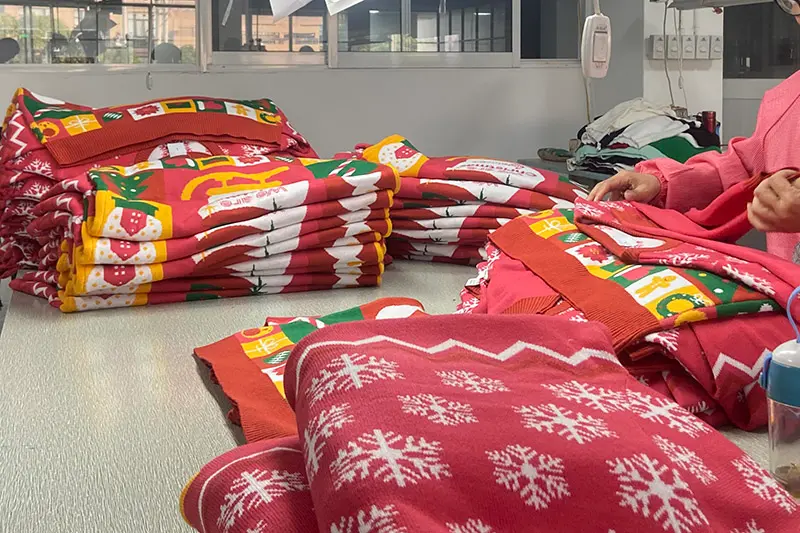
Alt: Red Christmas jumpers stacked on a factory table beside a worker handling a garment
Material choice affects how a Christmas jumper feels, how warm it is, how it washes, how much it may cost and how suitable it is for the final buyer.
For B2B orders, the right material is not always the most expensive one. A corporate gift order, a retail collection, a charity campaign and a private label range may all need different fabric decisions.
This guide explains common Christmas jumper materials in plain language, including acrylic, cotton, cotton blends, wool blends and mixed yarns. Use it before you request a quote or approve a sample.
Most Christmas jumpers use knitted yarns such as acrylic, cotton blends, wool blends or fibre mixes. There is no single best material for every order. The better question is: who will wear the jumper, where will it be sold or used, how warm should it be, what price level is expected and how easy should care be?
Quick Material Checklist
Use this checklist before choosing a yarn direction. It keeps the material decision tied to the real order purpose, not just the fibre name.
- Will the jumper be worn indoors, outdoors or in both situations?
- Does the wearer need warmth, breathability, softness or easy care most?
- Should the design look smooth, fluffy, heavy, light, classic or promotional?
- How important are stretch, shape recovery and neckline comfort?
- Does the buyer need clear fibre content for retail labels or private label pages?
- Will the target price allow cotton blend, wool blend or a heavier construction?
- Can the final care instructions match what the end customer expects?
Why Material Choice Matters in a Bulk Order
A buyer may first notice the pattern or logo, but the wearer notices the material.
Material affects:
- softness against the skin
- warmth in cold weather
- stretch and recovery
- weight and drape
- colour appearance
- pattern clarity
- washing and care
- price level
- repeat order consistency
In a small personal order, one person can accept a material preference. In a bulk order, the material has to work for many wearers. It also has to match the selling price, campaign purpose or brand position.
That is why material should be discussed before sampling. If the material direction changes after the first sample, the hand feel, colour, weight and cost may also change.
Acrylic Christmas Jumpers
acrylic-yarn-for-christmas-jumper-production.webp
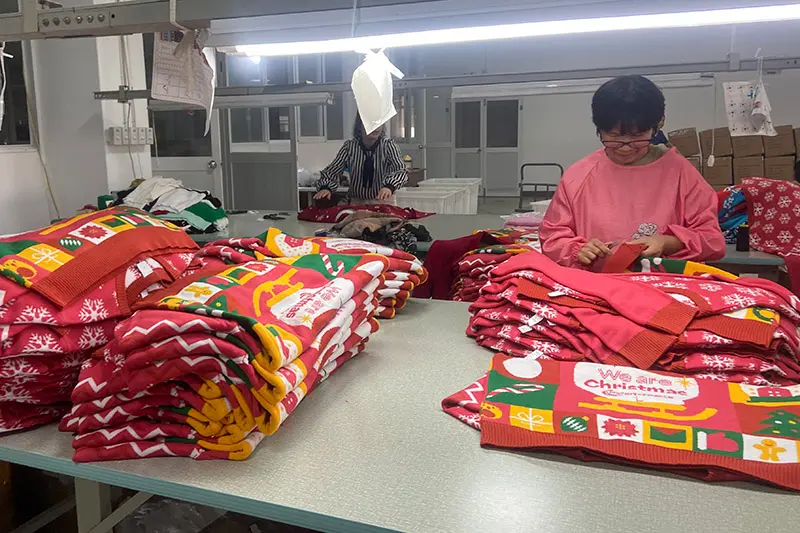
Alt: Workers finishing red Christmas jumpers at factory worktables
Acrylic is one of the most common materials used for Christmas jumpers.
It is popular because it works well for many seasonal orders. It can be knitted into bright colours, repeat patterns and festive designs. It is also usually easier to manage for cost-sensitive bulk orders compared with many natural fibre options.
Acrylic can be a practical choice for:
- promotional Christmas jumpers
- corporate gift orders
- charity campaign products
- Christmas market stock
- retail styles at an accessible price point
- designs with strong seasonal colours
For buyers, the main advantage is practicality. Acrylic can give a warm knitwear look without making the order too difficult to manage.
However, acrylic is not all the same. The hand feel can vary. Some acrylic jumpers feel soft and comfortable, while others may feel dry, stiff or less breathable. This depends on yarn quality, yarn thickness, knitting structure and finishing.
When reviewing an acrylic sample, check:
- whether the surface feels soft enough for the target wearer
- whether the jumper feels too light or too heavy
- whether the inside feels comfortable
- whether the colours match the design direction
- whether the jumper recovers after stretching
- whether the pattern looks clear enough
Acrylic is often a good starting point, but buyers should still review a real sample before confirming bulk production.
Cotton and Cotton-Blend Christmas Jumpers
cotton-blend-christmas-jumper-fabric-feel.webp
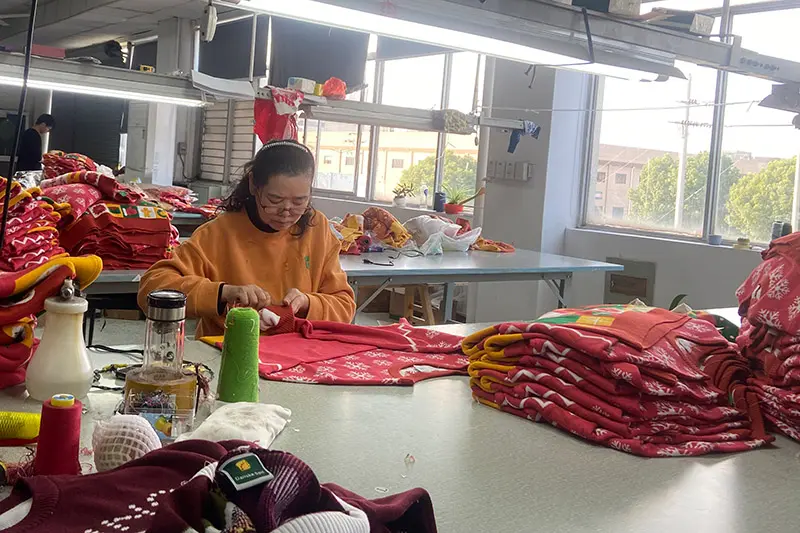
Alt: Worker using a needle to finish a red Christmas jumper at a worktable
Cotton and cotton blends are often chosen when buyers want a softer, more breathable feel.
Cotton can feel comfortable against the skin and may suit buyers who do not want a very woolly or synthetic hand feel. Cotton blends can also help balance softness, structure, stretch and cost.
These materials may work well for:
- lighter Christmas jumpers
- indoor wear
- family or lifestyle retail collections
- buyers who prefer a smoother hand feel
- designs where comfort is more important than heavy warmth
The trade-off is that cotton and cotton blends may not always give the same warm, fluffy or traditional winter look as other yarns. Depending on the yarn and knit structure, the jumper may feel heavier, flatter or less elastic.
For some Christmas designs, that is fine. For others, especially thick Nordic-style or winter-market designs, buyers may prefer a warmer or fuller material direction.
When checking a cotton or cotton-blend sample, pay attention to:
- softness
- weight
- stretch
- shape recovery
- how the hem and cuffs sit
- colour depth
- whether the fabric feels too flat for the design
Cotton blends can be useful, but the buyer should not choose them only because cotton sounds comfortable. The final sample should match the product purpose.
Wool and Wool-Blend Christmas Jumpers
wool-blend-christmas-jumper-sample-review.webp
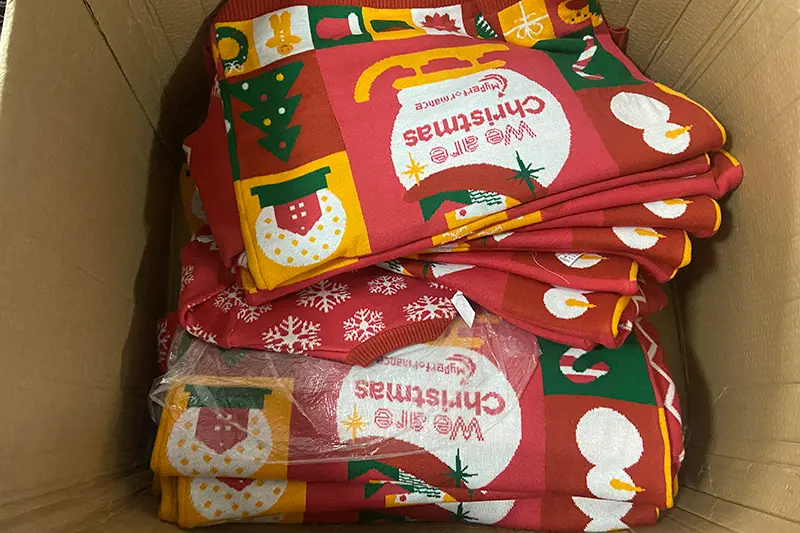
Alt: Folded red Christmas jumpers packed in a cardboard carton
Wool and wool blends are often linked with warmth and a more traditional knitwear feeling.
For Christmas jumpers, wool blends can be useful when the buyer wants a warmer product, a more premium hand feel or a more winter-focused style. This may fit some retail collections, Nordic-inspired designs or cold-weather markets.
A wool blend may be suitable for:
- warmer seasonal jumpers
- higher-positioned retail products
- Nordic or heritage-style designs
- buyers who want a more classic knitwear texture
- colder market regions where warmth matters
But wool blends also need more careful review. Some wearers are sensitive to wool. Some wool blends need more careful washing. The price can also be higher than acrylic or some cotton-blend options.
Before choosing a wool blend, buyers should check:
- whether the surface feels comfortable or itchy
- what the care label should say
- whether the jumper can meet the buyer's expected price level
- whether the wool content fits the product position
- whether the sample keeps its shape after handling
- whether the warmth level is suitable for the market
Wool blend does not automatically mean better. It means a different balance of warmth, feel, care and cost.
Polyester and Other Fibre Blends
Some Christmas jumpers use fibre blends that include polyester, nylon, viscose or other materials.
These blends are usually used to adjust performance, price, hand feel, stretch or stability. For example, one blend may help the jumper keep its shape better. Another may change the surface feel or make the material easier to manage in production.
For buyers, the exact fibre mix matters less than the result. The sample should answer practical questions:
- Does it feel comfortable?
- Does it look right for the design?
- Does it stretch and recover well?
- Does it match the target price?
- Does the care method make sense for the wearer?
- Does it suit the product position?
If the fibre content will be printed on a care label or retail label, confirm the exact wording before bulk production. This is especially important for private label orders.
Warmth: What Buyers Should Think About
christmas-jumper-warmth-and-weight-comparison.webp
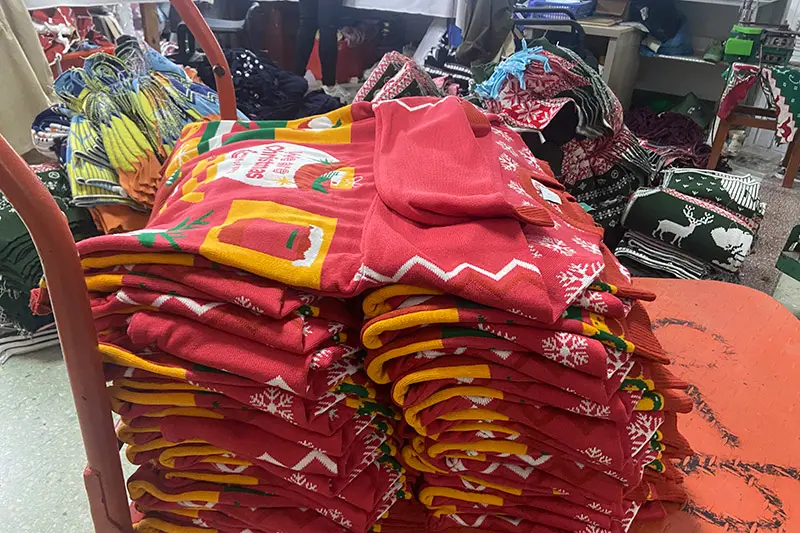
Alt: Folded red Christmas jumpers on a trolley among other patterned knitwear
Warmth does not depend only on fibre type.
A jumper can feel warmer or lighter because of:
- yarn thickness
- knit density
- garment weight
- fibre blend
- fit
- surface texture
- whether it is worn indoors or outdoors
Acrylic can feel warm enough for many Christmas jumper orders. Wool blends may feel warmer or more traditional. Cotton blends may feel more breathable but less winter-heavy.
For corporate gift or indoor party use, extreme warmth may not be needed. For outdoor Christmas markets or colder Nordic regions, buyers may want a heavier or warmer material direction.
Before choosing, think about the real wearing situation. A jumper for office events may need comfort and easy care. A jumper for outdoor winter selling may need more warmth and weight.
Comfort: More Than Softness
Many buyers ask for a soft jumper. Softness is important, but comfort includes more than touch.
A comfortable Christmas jumper should also have:
- suitable weight
- enough stretch
- stable cuffs and hem
- a neckline that does not feel rough
- inside seams that do not bother the wearer
- a surface that does not feel scratchy
- a fit that works for the size range
This is why sample review matters. A material may sound good on paper but feel different in the finished jumper.
If the order is for staff, charity supporters, retail customers or event participants, the jumper should be comfortable enough for real use, not only good enough for photos.
Cost: How Material Affects Price
Material is one of the cost factors in a Christmas jumper order. It is not the only one.
Price can also be affected by:
- order quantity
- yarn type
- colour count
- pattern complexity
- jacquard structure
- embroidery area
- labels
- hang tags
- packaging
- size range
- sample changes
Acrylic is often used for cost-sensitive orders because it can support many seasonal designs at a practical price level. Cotton blends and wool blends may increase cost depending on the yarn and construction.
Buyers should be clear about the target price range before sampling. If the material direction is too high for the selling price, the project may need adjustment later.
Care and Washing
Care requirements matter because Christmas jumpers are often worn repeatedly during the season.
Some buyers need easy-care products for staff uniforms, promotional campaigns or family retail use. Others may accept more careful washing if the jumper is positioned as a premium knitwear item.
Before confirming a material, ask:
- Can the jumper be machine washed or does it need gentle care?
- Will the material hold shape after washing?
- Is the surface likely to pill easily?
- Will the colour remain stable with normal care?
- What care label wording is needed?
- Does the care method match the final customer?
Do not leave care label decisions until the end if the order is private label or retail. Fibre content and care instructions should be confirmed before bulk production.
Material Choice by Order Purpose
Different order purposes need different material priorities.
For corporate gift orders, comfort, easy care, logo readability and stable sizing are often more important than using a premium fibre.
For retail orders, buyers may need to balance hand feel, price, shelf presentation, care label information and repeat order consistency.
For charity campaigns, the jumper should usually be practical, wearable and cost-aware. A clear design and comfortable material may matter more than a complicated fibre story.
For Nordic-style or colder-market jumpers, warmth, texture and winter feel may be more important. A heavier acrylic, wool blend or suitable mixed yarn may be worth checking.
For private label orders, material choice should also match the label, hang tag, care label and packaging plan. The product needs to feel consistent with the brand position.
What to Check in a Material Sample
christmas-jumper-material-sample-checklist.webp
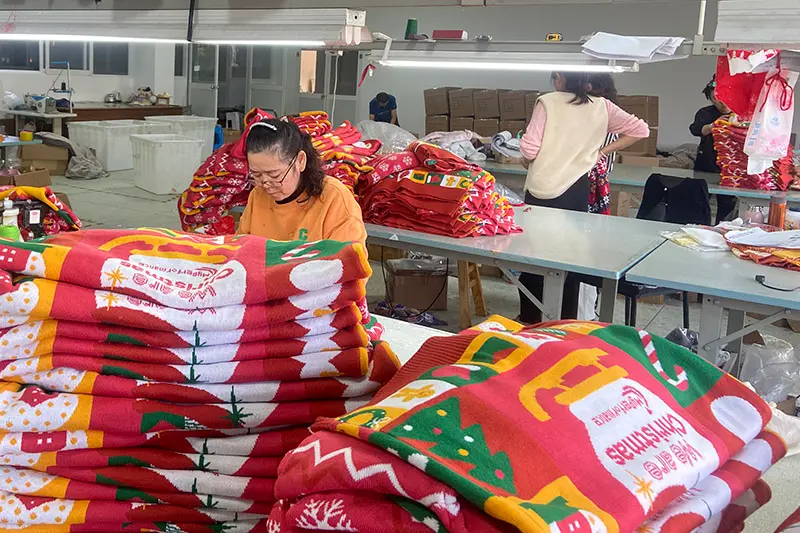
Alt: Factory finishing area with workers and stacks of folded Christmas jumpers
A material sample or first jumper sample should not be approved only by looking at photos.
Check the physical sample for:
- hand feel
- weight
- warmth
- stretch
- recovery
- neckline comfort
- cuff and hem stability
- inside feel
- pattern clarity
- colour appearance
- surface texture
- care label needs
If possible, compare the sample with the target buyer and selling situation. A jumper for a company event may need a different feel from a retail jumper sold as a winter gift.
Also check whether the material direction can be repeated for bulk production. If the order may be repeated next season, ask how close the same yarn colour and feel can be kept.
What Information to Send Before Asking for Material Advice
A supplier can give better material suggestions when the buyer shares enough context.
Before asking for advice, prepare:
- order purpose
- target market
- estimated quantity
- adult, kids or family sizing
- expected price level
- indoor or outdoor use
- design style
- logo or artwork requirements
- preferred hand feel
- warmth expectation
- care requirements
- private label or packaging needs
- delivery deadline if there is one
The buyer does not need to know the exact yarn blend at the beginning. It is often enough to explain the product goal and review suitable material options during sampling.
Conclusion
Choosing a Christmas jumper material is a practical buying decision. Acrylic, cotton blends, wool blends and other mixed yarns can all work, but they solve different problems.
Acrylic is often practical for seasonal bulk orders. Cotton blends can offer a softer and more breathable feel. Wool blends can add warmth and a more traditional knitwear texture. Other fibre blends may help adjust stretch, shape, price or surface feel.
The best choice depends on the wearer, market, design, care needs and price position. Before confirming bulk production, review a real sample and check comfort, warmth, weight, stretch, colour and care instructions.
If you are preparing a custom Christmas jumper order, start with the purpose of the jumper. Then choose the material direction that supports that purpose.
Related Guides
- Custom Christmas jumper options
- Christmas jumper product templates
- Custom production services
- Factory and production background
FAQ
Send your order purpose, target wearer, climate, expected price level, care needs and artwork direction. Our team can help review suitable material options before sampling.
Send your jumper material and order details