
Cotton and Cotton-Blend Christmas Jumpers: Pros, Limits and Best Uses
cotton-blend-christmas-jumper-material-sample.webp
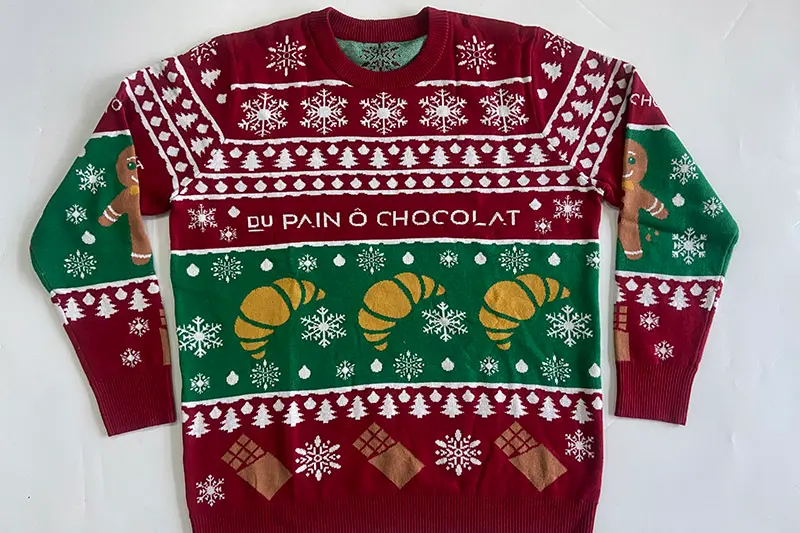
Alt: Front of a red and green Christmas jumper with white snowflakes and croissant motifs
Cotton and cotton-blend Christmas jumpers are often considered when buyers want a softer, smoother or more breathable feel.
That can make sense for some orders. A cotton direction may suit indoor wear, family collections, retail styles or buyers who do not want a very woolly hand feel. Still, cotton is not automatically the best choice for every Christmas jumper.
The final result depends on the fibre blend, yarn thickness, knit structure, garment weight, stretch, care method and target price. This guide explains when cotton and cotton blends work well, where they may have limits, and what buyers should check in a sample.
Cotton and cotton blends can be useful when comfort, softness and breathability matter more than heavy winter warmth.
Pure cotton may feel natural and comfortable, but it can also have limits in stretch, recovery, weight and price. Cotton blends are often used to balance softness with better structure, easier production or more practical cost.
For Christmas jumpers, buyers should choose cotton or cotton blend based on the wearing situation, target market and product position. A sample is still needed to check the real hand feel, shape and weight.
Quick Cotton-Blend Checklist
Use this checklist to decide whether cotton or a cotton blend fits the actual wearing situation. The goal is comfort and structure, not choosing cotton only because it sounds natural.
- Will the jumper mostly be worn indoors or in moderate temperatures?
- Does the sample feel soft at the neckline, cuffs and inside surface?
- Is the garment weight comfortable, or does it feel too heavy for the design?
- Do the cuffs, hem and neckline recover after light stretching?
- Do the colours and knitted pattern still look strong enough on a smoother surface?
- Does the care label match what retail customers or gift recipients expect?
- Does the price still fit after confirming the cotton percentage or blend?
What Buyers Usually Mean by Cotton or Cotton Blend
cotton-yarn-colours-for-custom-christmas-jumpers.webp
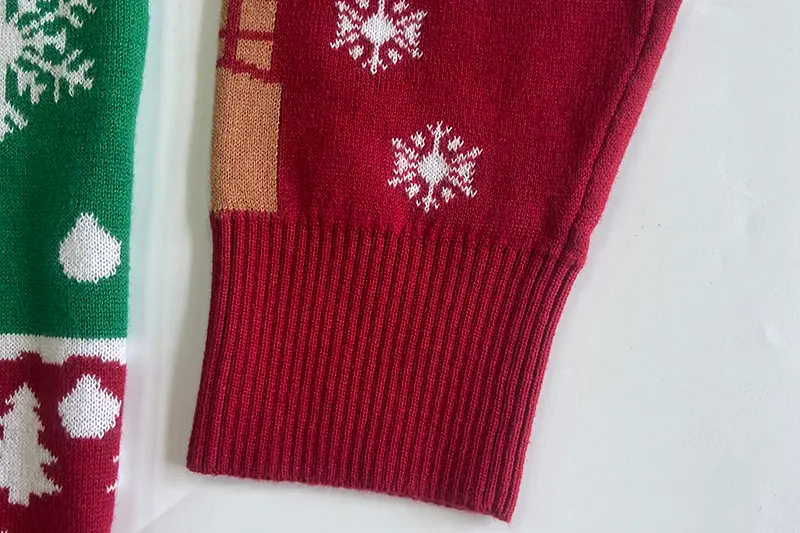
Alt: Close-up of a red ribbed cuff and snowflake pattern on a Christmas jumper sleeve
When buyers ask for cotton Christmas jumpers, they may mean different things.
Some want a natural fibre feel. Some want a jumper that is less itchy than wool. Others want something breathable for indoor use. A private label buyer may also want cotton content because it fits the product story or care label direction.
Cotton blend usually means cotton is mixed with another fibre to adjust the final result. The blend may improve stretch, shape recovery, durability, cost control or production stability.
For a custom order, the exact blend should be confirmed before care labels or retail labels are approved.
When Cotton Christmas Jumpers Work Well
Cotton can work well when the jumper is designed for comfort and moderate warmth.
It may suit:
- indoor Christmas events
- office holiday wear
- family Christmas collections
- lifestyle retail products
- buyers who prefer a smoother hand feel
- designs that do not need a thick winter texture
- markets where breathability matters more than heavy warmth
Cotton can feel pleasant against the skin, especially for wearers who dislike scratchy surfaces. It may also fit products that need a cleaner, flatter knit appearance.
For buyers selling or gifting jumpers for indoor use, this can be a practical direction.
When Cotton May Have Limits
Cotton is not always the easiest choice for Christmas jumpers.
Buyers should be careful if the order needs:
- a very fluffy winter look
- strong stretch and recovery
- a light but warm feel
- a thick Nordic-style texture
- a low price point
- a very structured shape across many sizes
- fast drying after washing
Cotton can sometimes feel heavier or flatter than buyers expect. It may also behave differently from acrylic or wool blends in rib areas, cuffs, hems and neckline recovery.
This does not mean cotton is unsuitable. It means the finished sample should be checked carefully before bulk production.
Why Cotton Blends Are Often More Practical
For many B2B Christmas jumper orders, cotton blends are more practical than pure cotton.
A blend can help adjust:
- softness
- stretch
- shape recovery
- garment weight
- cost level
- colour effect
- surface feel
- production stability
For example, one blend may feel softer. Another may help the jumper hold shape better. Another may make the material easier to manage for a certain price level.
The buyer does not always need to choose the exact fibre mix at the first discussion. It is more useful to explain the target hand feel, warmth level, price position and order purpose. The supplier can then suggest a suitable blend direction for sampling.
Softness: What to Check

cotton-blend-christmas-jumper-sample-review.webp
Alt: Buyer reviewing a cotton blend Christmas jumper sample for comfort weight and stretch
Cotton is often chosen because buyers expect softness. That expectation should still be tested in the finished jumper.
When checking softness, look beyond the outside surface. Review:
- inside feel
- neckline comfort
- cuff and hem touch
- shoulder and seam areas
- whether the surface feels dry or smooth
- whether the garment feels comfortable after movement
A jumper can feel soft in one area but less comfortable around the neck or cuffs. This matters for corporate gifts, family wear and retail products, where people may wear the jumper for several hours.
If the jumper is for children or family collections, comfort checks become even more important.
Breathability and Indoor Wear
Cotton and cotton blends may feel more breathable than some heavier winter materials.
This can be useful when the jumper will be worn indoors, such as:
- office parties
- school events
- charity campaign days
- retail gifting
- family photos
- indoor Christmas markets
A very warm jumper can be uncomfortable indoors. If the wearer is likely to stay inside most of the time, breathability and moderate warmth may matter more than thick winter weight.
Still, cotton blend does not always mean light. Yarn thickness and knit density can make the jumper heavier. The sample should be checked for both breathability and weight.
Structure, Shape and Recovery
cotton-blend-christmas-jumper-stretch-recovery-check.webp
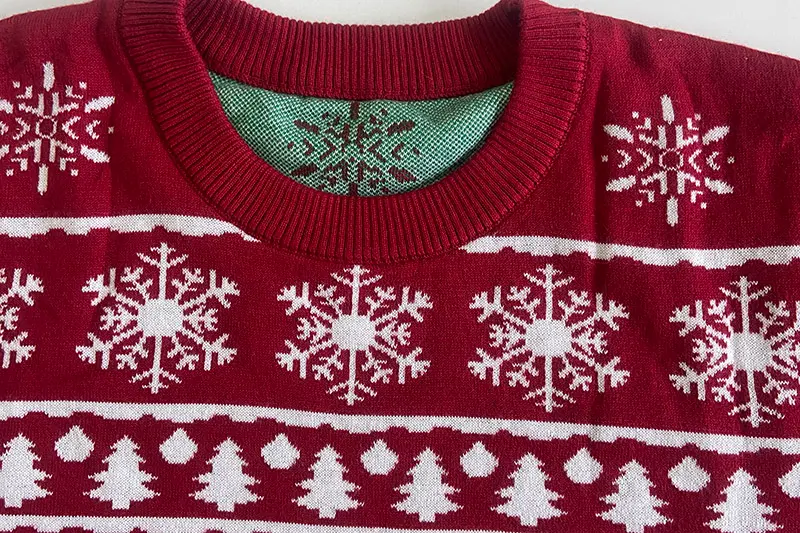
Alt: Close-up of a red ribbed neckline and white snowflake pattern on a Christmas jumper
Cotton behaves differently from acrylic or wool blends.
Depending on the yarn and knit construction, cotton-based jumpers may feel heavier, drape differently or recover less strongly after stretching. This can affect the neckline, cuffs, hem and body shape.
Before approving a sample, check:
- whether the neckline keeps its shape
- whether cuffs feel stable
- whether the hem sits flat
- whether the body stretches too much
- whether sleeves hold their shape
- whether the jumper feels too heavy for the design
- whether measurements stay close to the size specification
For bulk orders, shape consistency matters across sizes. A cotton-blend direction may help improve structure, but it should be checked on the actual sample.
Warmth and Seasonal Feel
Cotton and cotton blends can work for Christmas jumpers, but they may not always give the heaviest winter feel.
For some buyers, that is a benefit. A lighter or more breathable jumper may be easier to wear indoors and may suit a lifestyle or family retail range.
For other buyers, especially those targeting colder outdoor use or a thick Nordic-style look, cotton may not feel warm or full enough. In those cases, acrylic, wool blend or another mixed yarn may be worth comparing.
The right choice depends on where the jumper will be worn. A Christmas jumper for office events does not need the same warmth level as one sold for outdoor winter markets.
Colour and Design Appearance
Cotton and cotton blends can give a different colour and surface effect from acrylic or wool blends.
The knitted surface may look smoother or flatter depending on the yarn. Some buyers like this cleaner look. Others may prefer the fuller seasonal texture of acrylic or wool blends.
When checking a cotton or cotton-blend sample, review:
- whether colours look strong enough
- whether contrast is clear
- whether the design looks too flat
- whether small pattern details are readable
- whether the logo works at the chosen size
- whether the surface matches the product position
Do not judge the design only from digital artwork. Yarn colour and knitted structure can change how the artwork looks.
Price Considerations
Cotton and cotton blends can affect price differently from acrylic.
The final price may depend on:
- fibre blend
- yarn thickness
- garment weight
- order quantity
- colour count
- jacquard complexity
- embroidery area
- size range
- labels
- hang tags
- packaging
- sample changes
Pure cotton or higher cotton-content blends may not always fit a cost-sensitive campaign. For retail or private label buyers, the added cost may be acceptable if the material supports the product position.
Before sampling, buyers should share the target price level. That helps avoid developing a material direction that feels good but does not fit the final selling plan.
Care and Washing
cotton-blend-christmas-jumper-care-label-review.webp
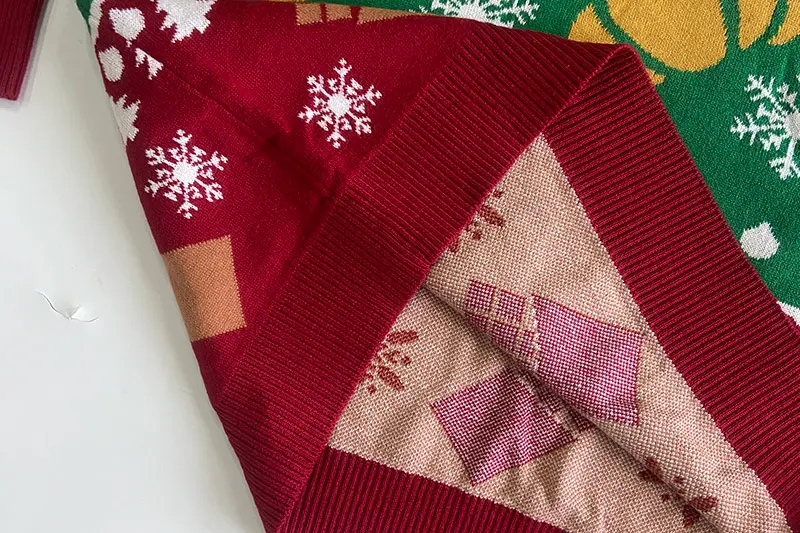
Alt: Turned-back ribbed edge showing the inside stitches of a red and green Christmas jumper
Care requirements should be checked early for cotton and cotton-blend jumpers.
Buyers should confirm:
- washing method
- drying method
- shrinkage risk
- shape recovery after washing
- whether the jumper should be dried flat
- whether ironing is allowed
- fibre content wording
- care label wording
- Private label and retail buyers should pay special attention here. The care label should match the actual material and expected use.
If easy care is important, say so before sampling. A material that needs careful washing may not fit a promotional or staff-use order.
Best Uses for Cotton and Cotton Blends
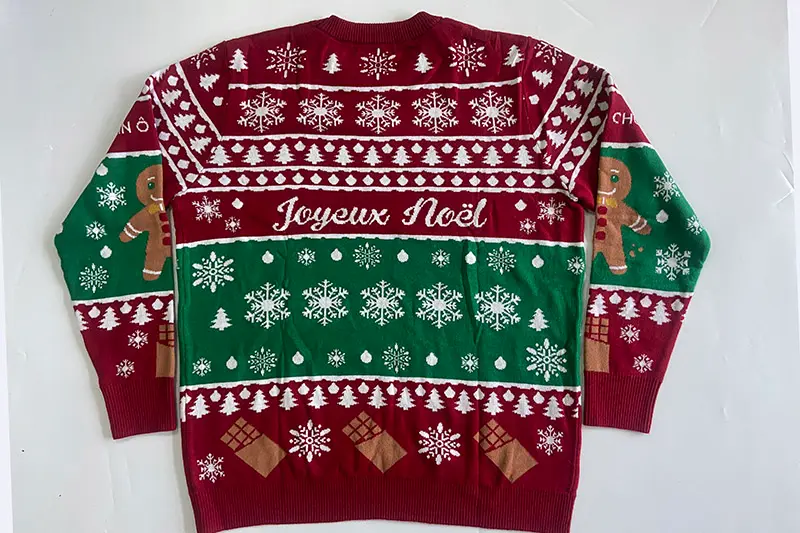
folded-cotton-blend-christmas-jumpers-private-label.webp
Alt: Back of a red and green Christmas jumper with Joyeux Noël lettering and festive patterns
Cotton and cotton blends often make sense when the order needs comfort, a smoother hand feel and moderate warmth.
They may be a good direction for:
- indoor corporate gift jumpers
- family Christmas jumper collections
- lifestyle retail ranges
- private label products with a softer position
- buyers who want less woolly texture
- mild-weather markets
- designs where a cleaner surface works better
They may be less suitable when the buyer needs the lowest practical price, a very thick winter texture, strong wool-like warmth or a highly fluffy festive look.
The best use depends on the buyer's market. A cotton blend can be a strong choice when the wearer experience matters more than heavy seasonal texture.
What to Check Before Approving a Cotton-Blend Sample
A cotton-blend Christmas jumper sample should be checked as a finished garment, not only as a material swatch.
Review:
- outside softness
- inside comfort
- breathability
- garment weight
- stretch and recovery
- neckline shape
- cuff and hem stability
- sleeve and body drape
- pattern clarity
- colour contrast
- logo readability
- washing and care requirements
- fibre content label
- packing method if the order is retail or private label
If the order includes multiple sizes, check whether the garment shape and design balance work across the size range. Cotton-based materials can change the way the jumper hangs on the body.
If the order may repeat, ask how closely the same yarn colour, hand feel and blend can be maintained in a future production run.
What Information to Send Before Asking for Cotton Options
A supplier can give better material advice when the buyer explains the product goal.
Before asking for cotton or cotton-blend options, prepare:
- order purpose
- target market
- estimated quantity
- adult, kids or family sizing
- design artwork or reference image
- expected warmth level
- preferred hand feel
- target price level
- colour requirements
- logo placement
- care requirements
- private label or packaging needs
- delivery deadline if there is one
Buyers do not need to decide the exact blend alone. It is often better to describe the wearer, market and product position first, then review suitable material samples.
Conclusion
Cotton and cotton-blend Christmas jumpers can be a good choice when buyers want softness, breathability and a smoother hand feel.
They often make sense for indoor wear, family collections, lifestyle retail styles and private label products where wearer comfort is important. Cotton blends can also help balance comfort with structure, stretch, shape recovery and price.
At the same time, cotton is not the best direction for every Christmas jumper. It may feel heavier, flatter or less warm than some buyers expect. The sample should be checked for comfort, weight, structure, colour, care and size consistency before bulk production.
The safest approach is to start with the product purpose. If the jumper needs comfort and moderate warmth, cotton or a cotton blend may be worth sampling. If the order needs thick winter texture, strong seasonal warmth or lower-cost campaign production, compare other material directions as well.
Related Guides
- common Christmas jumper materials
- acrylic Christmas jumpers
- wool-blend Christmas jumpers
- custom Christmas jumper order details
- custom Christmas jumper options
- custom production services
FAQ
Send your design, target wearer, wearing situation, quantity, price level and care needs. We can help compare cotton and cotton-blend directions before sample approval.
Send your cotton-blend jumper order details